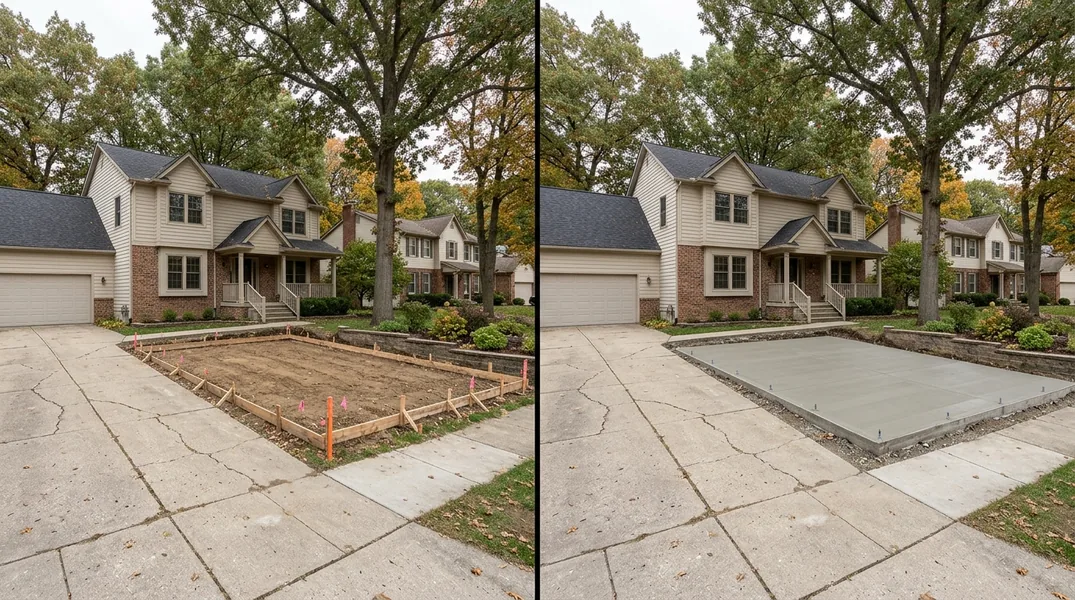
Why New Construction Slab Inspection Matters
Purchasing a new home is one of the largest investments you'll make, and the foundation literally supports everything that comes after. When you're buying a new construction property in Ann Arbor, the concrete slab beneath your home deserves careful attention before you close on the deal. Many homebuyers focus on cosmetic finishes, appliances, and floor plans, but they overlook the critical concrete work that will determine whether their home remains structurally sound for decades to come.
A builder slab inspection in Michigan isn't just a formality. Concrete slabs can develop cracks, settle unevenly, or fail to meet local building codes if not properly installed. Since Michigan's freeze-thaw cycles and seasonal moisture changes put extra stress on concrete, a thorough inspection before closing protects you from costly repairs down the road. Whether it's your garage slab, basement floor, or foundation perimeter, understanding what to look for gives you peace of mind and leverage if problems are discovered.
What to Look for in Your New Home's Garage Slab
The new home garage slab is often one of the first concrete elements to show wear because it endures heavy traffic, temperature swings, and exposure to road salt and moisture. During your pre-closing walkthrough, examine the entire garage floor surface under bright lighting. Look for visible cracks, especially those wider than one-eighth inch or any that run across the slab rather than following a pattern. Small hairline cracks may be cosmetic, but diagonal or step cracks can indicate settling or improper installation and should be documented and reported to your builder.
Pay attention to the slope and drainage around the garage slab as well. Proper concrete work should slope gently away from the foundation to prevent water pooling. If you notice standing water or areas where water would collect after rain, that's a red flag for future problems. Check the slab's edges and the transition where it meets the foundation wall. Any gaps, spalling (flaking concrete), or separation between the slab and wall should be noted. Also walk the entire floor surface to feel for any soft spots or areas that seem to dip unexpectedly. These signs can indicate poor subgrade preparation or inadequate concrete thickness, both of which compromise the slab's longevity.
Foundation and Basement Slab Concerns in Ann Arbor New Builds
Your home's basement or crawlspace slab is equally important as the garage, yet it's often overlooked because it's out of sight. In Ann Arbor, where groundwater and seasonal moisture are common challenges, a poorly installed basement slab can lead to dampness, mold, and structural issues. During your inspection, check the basement floor for cracks, especially radial cracks that spread from a central point like a spider web. These patterns often indicate stress from uneven settling or hydrostatic pressure from water beneath the slab.
Look for any signs of moisture on or around the basement slab. This includes efflorescence (white, chalky deposits on the concrete surface), damp spots, or a musty odor. While some moisture is normal in basements, active seepage or persistent dampness suggests the slab wasn't sealed properly or the drainage system is inadequate. Check the perimeter where the slab meets the foundation walls and inspect any floor drains or sump pump installations. Ensure they're functioning and properly graded. If you're uncertain about any moisture issues, consider hiring a professional inspector who can use moisture meters and thermal imaging to assess the slab's condition before you commit to closing.
Ann Arbor New Build Concrete Standards and Building Codes
Michigan's building codes establish minimum standards for concrete work in new construction, but builders sometimes cut corners or misinterpret requirements. Familiarize yourself with basic code expectations so you know what questions to ask. Concrete slabs should be reinforced with rebar or wire mesh, have a minimum thickness (typically 4 inches for garage slabs), and be installed over a properly prepared and compacted subgrade. The concrete itself must meet strength requirements, usually 3,000 PSI (pounds per square inch) for residential use.
Before closing, request documentation from your builder showing that concrete work was inspected by the local building department. In Washtenaw County, the Building and Zoning Department typically conducts inspections at key stages. Ask your real estate agent or builder for copies of inspection reports and any permits issued for concrete work. If inspections weren't completed or documented, that's a significant red flag. You can also contact your local building department to verify that proper permits were pulled and inspections passed. Don't assume that because a home is new, all concrete work meets code. Verifying this information takes minimal effort and could save you thousands in future repairs.
When to Call a Professional for a Detailed Slab Evaluation
While a visual walkthrough is essential, some concrete issues aren't visible to the untrained eye. If you notice any significant cracks, moisture, or uneven surfaces during your inspection, or if something just feels off about the slab's condition, hiring a professional concrete inspector is a smart investment. A qualified inspector can assess load-bearing capacity, check for proper slope and drainage, and identify potential problems that may not manifest for years. They can also provide documentation that protects you if issues arise after closing.
If you're purchasing a new build in Ann Arbor and discover problems with the concrete slab, don't hesitate to contact the builder before closing. Reputable builders will address legitimate defects. If the builder refuses or disputes your concerns, having a professional inspection report gives you leverage and documentation. For future reference, if you ever need Concrete Repair & Resurfacing work or want to upgrade your driveway or outdoor spaces, Ann Arbor Concrete specializes in both residential repairs and new installations. We're here to help with any concrete concerns that arise after you've settled into your new home.
Taking Action Before Closing
Your pre-closing walkthrough is your last opportunity to identify and negotiate concrete defects. Create a detailed checklist before you visit the property. Document everything with photos and notes, including the date and time. Measure any cracks with a ruler, note their location and direction, and describe any moisture or discoloration you observe. Take photos from multiple angles and in different lighting conditions. This documentation becomes invaluable if you need to discuss issues with your builder or if problems develop later.
If significant defects are discovered, you have options. You can request that the builder repair the concrete before closing, negotiate a credit toward repairs, or in some cases, renegotiate the purchase price. The key is identifying problems early and having professional documentation to support your concerns. If you need guidance on what's normal versus what requires attention, reaching out to a concrete professional for a free estimate or consultation can clarify your options. Ann Arbor Concrete is available at (734) 249-8552 to answer questions about concrete quality and help you understand what to expect from a properly installed slab. Taking these steps now protects your investment and ensures your new home has a solid foundation for years to come.
Looking for a professional concrete contractor in Ann Arbor? Ann Arbor Concrete responds fast for all your concrete needs.
Get a Free QuoteOur services: Concrete Driveways · Concrete Patios · Stamped & Decorative Concrete