Understanding Ann Arbor's Unique Soil and Climate Challenges
If you own a home in Ann Arbor, you've likely noticed that your driveway seems to crack, heave, or deteriorate faster than you'd expect. This isn't just bad luck or poor installation. The reality is that Ann Arbor's geological makeup and Michigan's harsh winters create an especially hostile environment for concrete structures.
The region sits atop glacial deposits that left behind dense, clay-heavy soil. This glacial clay has a unique property: it expands dramatically when it absorbs water and contracts when it dries. Unlike sandy or well-draining soils, clay holds moisture for extended periods, especially during Michigan's wet springs and the freeze-thaw cycles that dominate the season. When water trapped in this clay freezes, it exerts tremendous pressure on anything resting above it, including your Concrete Driveways. This combination of glacial clay, moisture retention, and temperature swings creates conditions that are genuinely challenging for concrete longevity.
Freeze-Thaw Damage: Michigan's Concrete Killer
Freeze-thaw damage is perhaps the single most destructive force affecting concrete in Michigan. The mechanism is simple but powerful: water enters microscopic pores and cracks in the concrete surface. When temperatures drop below freezing, that water expands as it turns to ice, exerting pressure from within the material itself. This pressure fractures the concrete from the inside out. When temperatures rise again, the ice melts and the concrete contracts. Repeat this cycle dozens of times throughout a Michigan winter, and you're left with surface spalling, scaling, and deep structural cracks that only worsen with each passing season.
What makes freeze-thaw damage particularly insidious is that it's cumulative and often invisible at first. You might not notice significant damage until spring, when you see chunks of concrete missing from the surface or hairline cracks that seem to grow overnight. By that point, the damage has often penetrated deeper than surface treatment can fix. This is why homeowners in Ann Arbor frequently find themselves needing Concrete Repair & Resurfacing services by mid-spring, sometimes just a few years after installation.
Road Salt and Chemical Deterioration
Winter road maintenance in Michigan relies heavily on road salt and de-icing chemicals to keep streets passable. While these products are essential for safety, they're devastating for concrete. Salt doesn't just sit on the surface; it dissolves into water, penetrates the concrete, and attacks the cement paste that binds the aggregate together. This process, called salt scaling, causes the surface layer of concrete to spall and flake away. Additionally, road salt accelerates the corrosion of any reinforcing steel within the concrete, which can lead to structural failure over time.
The chlorides from road salt also lower the freezing point of water in concrete pores, meaning freeze-thaw cycles can occur at temperatures above 32 degrees Fahrenheit. This extends the damaging season and increases the number of damaging cycles your driveway experiences each year. Homeowners who live near main roads or who don't rinse their driveways regularly after winter salt applications see accelerated deterioration. The combination of salt, moisture, and freeze-thaw creates a triple threat that standard concrete struggles to withstand without proper protection and maintenance.
Frost Heave and Uneven Settling: Why Your Driveway Buckles
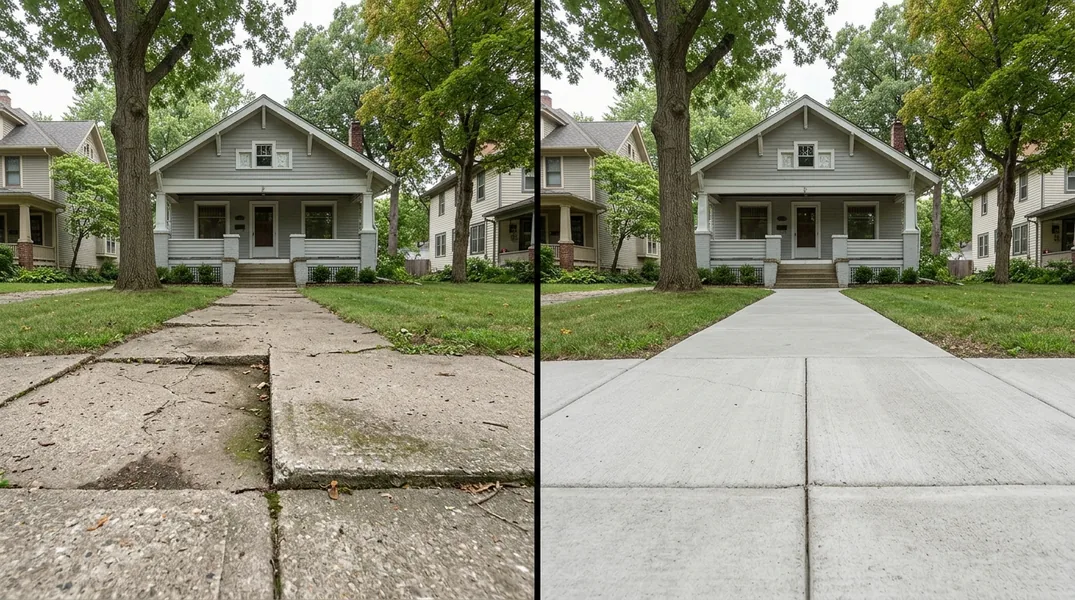
One of the most visually dramatic problems affecting Concrete Driveways in Ann Arbor is frost heave. This occurs when the soil beneath your driveway freezes and expands, literally pushing the concrete upward. The glacial clay common in the region is particularly prone to frost heave because it retains moisture and expands significantly when frozen. A driveway that was perfectly level in October might have a half-inch or full-inch lip or buckle by February. Not only is this a tripping hazard and an eyesore, but it also indicates that the underlying soil is experiencing significant stress.
Frost heave is often a symptom of poor drainage or inadequate base preparation beneath the concrete. If water pools under or around your driveway, it will freeze and heave. This is why proper grading, base preparation, and drainage are critical during initial installation. Once frost heave has occurred, the damage is difficult to reverse without removing and replacing the affected section. If you're experiencing buckling or uneven settling, it's important to address the root cause (usually drainage issues) before investing in repairs, or the problem will simply recur next winter. Consulting with a professional about Concrete Repair & Resurfacing options can help you develop a lasting solution.
Protecting Your Concrete: Prevention and Maintenance Strategies
The good news is that concrete damage in Michigan and Ann Arbor can be significantly slowed or prevented with proper care. The first line of defense is a high-quality sealer applied to new concrete and reapplied every two to three years. A good sealer fills surface pores and creates a barrier that prevents water and salt from penetrating the concrete. This single step can dramatically extend the life of your driveway by reducing the rate of freeze-thaw damage and salt deterioration.
Beyond sealing, maintenance matters enormously. Remove snow and ice promptly to minimize the time salt sits on the surface. When you do use de-icing products, choose calcium chloride or magnesium chloride over sodium chloride (rock salt) when possible, as they're somewhat less damaging to concrete. Rinse your driveway with fresh water in early spring to remove residual salt. Ensure that water drains away from your driveway rather than pooling along edges or underneath. Fill small cracks as soon as you notice them to prevent water infiltration. These simple steps, performed consistently, can add years to the life of your concrete investment.
When to Call a Professional: Getting Expert Help Near Me
While preventive maintenance can extend the life of your concrete significantly, there comes a point when professional intervention is necessary. If you notice widespread cracking, significant spalling, frost heave that's worsening, or if your driveway is more than ten years old and showing signs of deterioration, it's time to get a professional assessment. Attempting DIY repairs on structural damage often leads to temporary fixes that fail within a season or two, ultimately costing more in the long run.
Ann Arbor Concrete specializes in diagnosing and addressing the unique challenges that Michigan's climate and soil conditions create for concrete structures. Whether you need a full replacement, targeted Concrete Repair & Resurfacing, or guidance on protecting your existing driveway, a professional evaluation is the best first step. Call us at (734) 249-8552 or visit our website to request a free estimate. We'll assess your specific situation, explain what's causing the damage, and recommend solutions tailored to your driveway's condition and your budget. With decades of experience working in Michigan's challenging climate, we understand exactly what your concrete is up against and how to build or repair it to last.
Looking for a professional concrete contractor in Ann Arbor? Ann Arbor Concrete responds fast for all your concrete needs.
Get a Free QuoteOur services: Concrete Driveways · Concrete Patios · Stamped & Decorative Concrete